Their AI help desk looked like a win. Then the good customers left.
If your bot answers without anyone owning the answer — keep reading.
The dashboard was green. Retention wasn't.
They deployed an AI chatbot for customer service. Response times dropped. Ticket volume shrank.
Then high-value customers started leaving.
⚠ No judgment. No accountability. No retention.
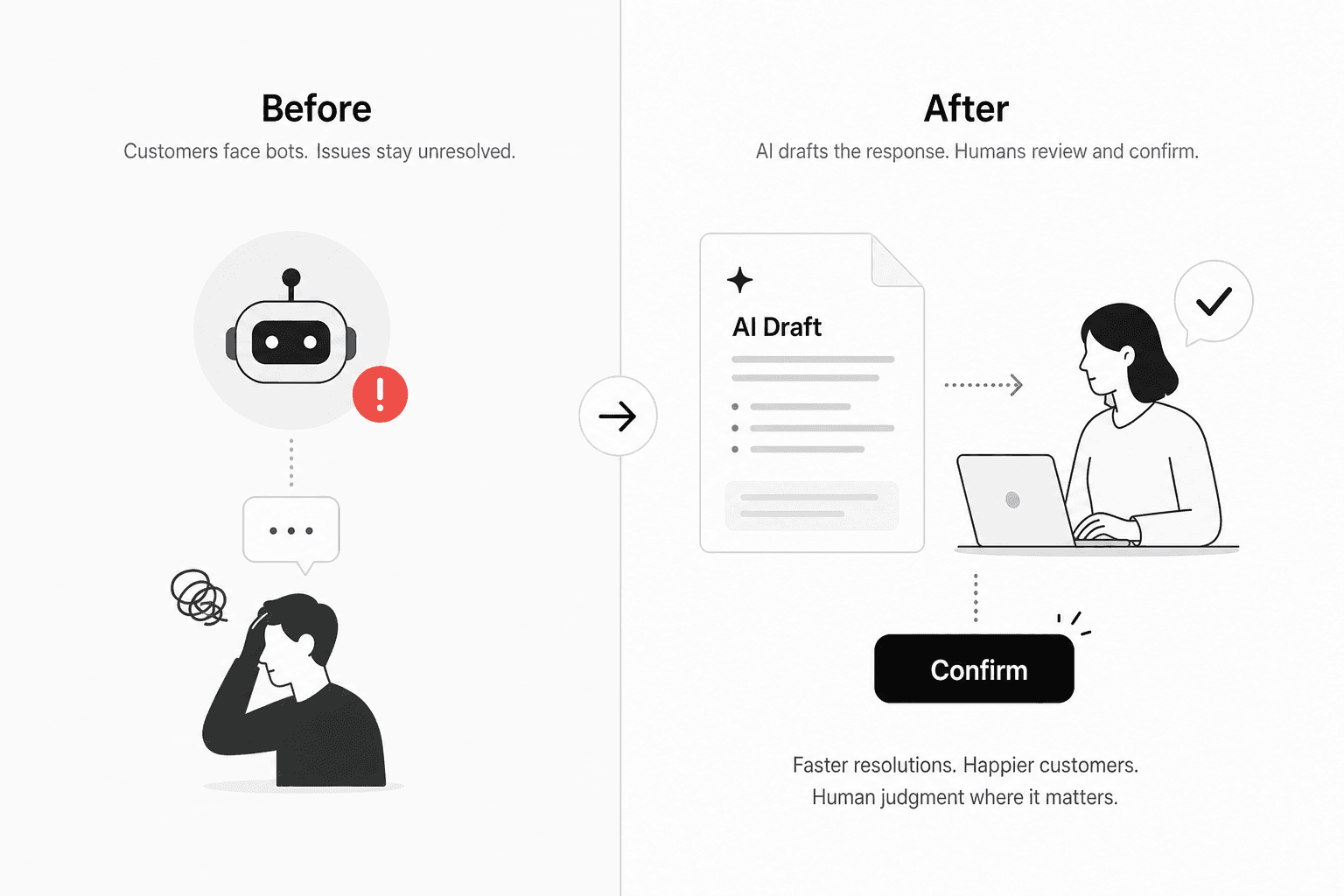
Fast answers that invented policy. Nobody owned the reply.
The mistake wasn't AI
Removing the human from the loop doesn't just remove work. It removes judgment.
The problem wasn't that a machine was answering questions. The problem was that no one was responsible for the answer.
Machine drafts. Human confirms.
We kept the AI for the busywork — pull history, look up policy, draft the reply — then gave a human one button.
Confirm.
✓ Efficiency up 40%. Judgment preserved. Retention stabilized.
Team reviewed drafts instead of writing from scratch — or cleaning up bad bot answers.
Churn among high-value accounts returned to baseline within 60 days.
The best automation makes people feel more in control — not less.
They ran dozens of jobs from one spreadsheet and a pile of text messages. We built them something better.
Master Project List
Keep watching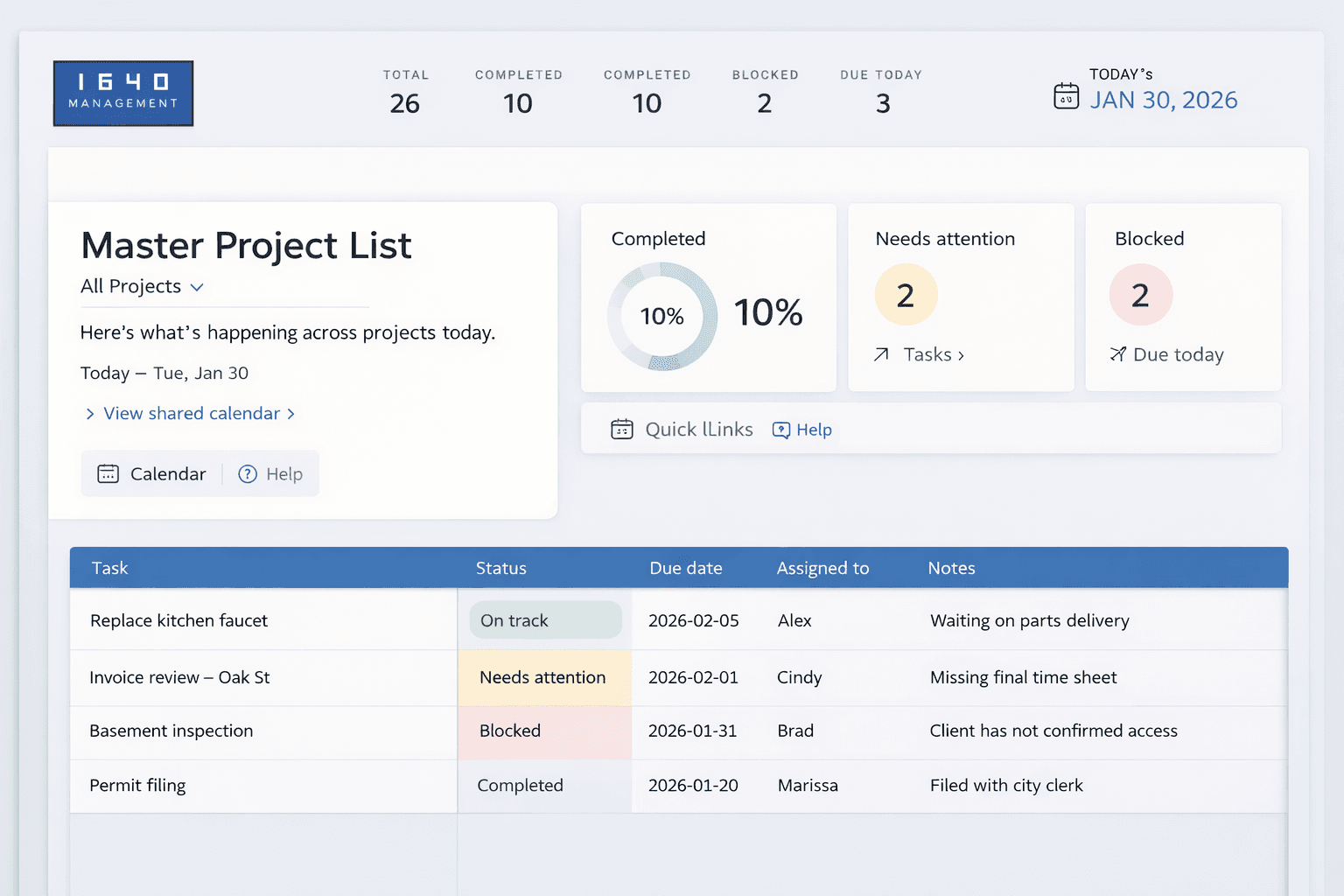
A short consult. A clear map of what to fix first — and what to leave alone.